
 In her recent article, Why Implementing the Evidence-Based Approach Isn’t Enough, educator, consultant and Learning Difficulties specialist Julie Scali reminds us that professional learning is just the beginning, not the end, of change. Even the most research-aligned approach will only reach its potential when the right systems, routines, and supports are in place.
At Little Learners Love Literacy® (LLLL) we see this truth every day. Schools invest in high-quality programs, but lasting impact comes from implementation – from creating shared clarity, consistent routines and ongoing feedback that help teachers turn evidence into action.
Implementation isn't the outcome of just attending a workshop, but the result of deliberate planning, modelling and continuous support. Our goal at LLLL is to help schools build these conditions so that explicit, evidence-based instruction becomes an everyday reality for every child.
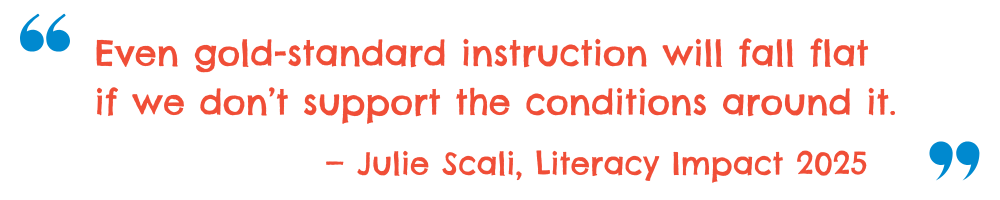
Inspired by Julie's insights, we’re sharing a few key reflections to help schools strengthen implementation and build the conditions for long-term success.

Strong implementation starts before lessons begin.
We see that schools who get the best results take time to set up clear routines and shared expectations.
- Build shared purpose – help every teacher understand why explicit, systematic synthetic phonics instruction matters and how LLLL routines fit within the LLLL teaching model.
- Start small and strategic – introduce one key routine, such as Let’s Spell or Partner Reading, and build mastery before layering more.
- Clarify expectations – use the scope and sequence, The Little Learners Love Literacy® Playbook, Teacher Activity Resources (TARs), and workshop training to clarify lesson frequency, structures and routines so Foundation–Year 2 classrooms stay aligned.
When these foundations are in place, teachers can focus on quality instruction rather than navigating uncertainty.

Clarity helps everyone teach with confidence.
Every teacher, at every year level, needs to know what to teach, how often, and how it looks in practice.
LLLL’s structured routines, and scope and sequence give schools a shared language for what “good looks like”.
Leadership can support this by:
- using the detailed support provided in the TARs to align expectations on lesson routines and pace
- scheduling regular review cycles to monitor fidelity and celebrate success
- providing clear models and classroom walkthroughs to strengthen consistency
- ensuring routines are consistent across classes so students get the same strong start no matter who teaches them.

Our workshops start the journey, but confidence grows through ongoing support. Teachers need time, feedback and encouragement to embed new routines until they become part of everyday practice.
Schools can strengthen teacher confidence by:
- building coaching and peer observation around LLLL routines
- using professional learning communities to focus on one practice at a time
- modelling lessons or team-teaching to develop collective efficacy.

Sustainable improvement depends on noticing what’s working and acting quickly when it isn’t.
Classroom-based formative assessments, such as checking for understanding during lessons and
end-of-stage reviews help teachers identify next instructional steps. Formal assessment tools such as the Little Learners Assessment of Reading Skills (LLARS) and the Little Learners Assessment of Spelling Skills (LLASS) can support this when used twice a year, but the real impact comes from day-to-day observations and timely feedback.
Leaders can support this by building regular check-ins to review student data, track fidelity and adjust instruction. This ensures every child receives the right support, at the right time.

Strong implementation isn’t about adding more, it’s about focussing on what makes the biggest difference. Schools often see greater success when they simplify, streamline, and make space for consistent routines.
The LLLL approach does exactly that: high-impact routines, ready-to-use materials, and structured teaching sequences that reduce teacher load and maximise time on task.
As Julie Scali reminds us, improvement requires clarity, not clutter.
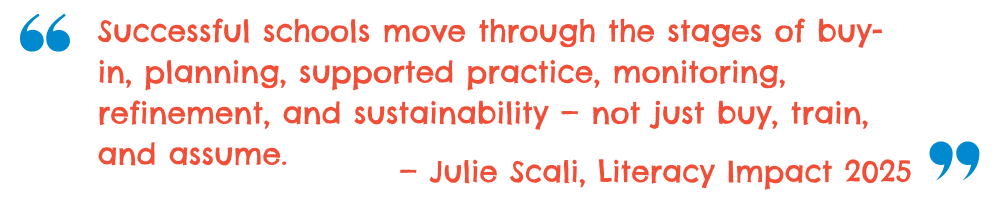
High-quality programs matter, but it’s the implementation that transforms them into powerful learning experiences. At LLLL, we’re committed to helping schools build the systems, routines and professional confidence needed to make evidence-based instruction an everyday reality.
Remember, you don’t have to do it alone. LLLL offers coaching support and tailored workshops to help schools strengthen implementation, refine routines and build teacher confidence over time. Book a session with a LLLL coach to audit your implementation readiness.

.png?width=330&height=330&name=Partner%20with%20us!%20(2).png) If your school is looking to strengthen implementation in 2026, the Literacy Partnership Program for Schools provides whole-school support to build clarity, consistency and confidence across Foundation to Year 2.
If your school is looking to strengthen implementation in 2026, the Literacy Partnership Program for Schools provides whole-school support to build clarity, consistency and confidence across Foundation to Year 2.
The partnership combines coaching, professional learning, leadership guidance and parent engagement so your team can implement Little Learners Love Literacy® with accuracy and sustainability. Programs are co-designed with school leaders and focus on building internal capability – helping your staff teach and lead LLLL independently over time.